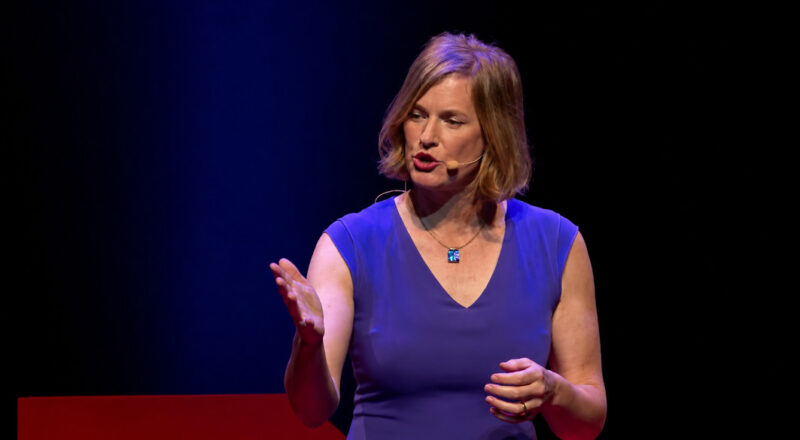
Vivienne Ming – From Homelessness to AI Visionary

Vivienne Ming is a theoretical neuroscientist, AI researcher, entrepreneur, and public thinker who keeps returning to one deceptively simple mission. That’s to use technology towards maximizing human potential.
A transgender woman who reached her scientific stride by an unconventional route, she tackles big social problems:
- Education
- Hiring
- Health
- and Economic inclusion
and then prototypes pragmatic tools to nudge outcomes in a better direction. Along the way, she’s become a widely cited voice on ethical AI, workforce futures, and what she famously calls “the tax on being different.”
Early detours, late bloom
Ming didn’t follow a tidy academic script. She has spoken openly about leaving college, wrestling with depression, and experiencing homelessness in her 20s before clawing her way back.
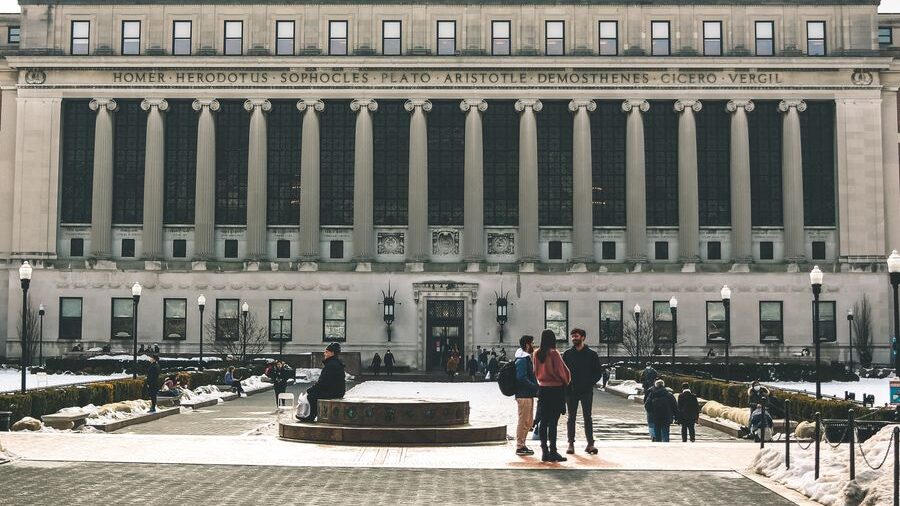
She finished a neuroscience degree and earned a master’s and PhD. Then she proceeded to complete postdoctoral work at top research centers. That winding return set the through-line of her career: build models of minds not to replace people, but to augment them.
The commitment to make tech serve messy, complicated humans—rather than force humans to behave like machines—never left.
Transition and personal clarity
Ming transitioned later in life. She has been frank about the joy of living authentically and the social contrasts she noticed on the other side of transition. How colleagues treated her, who got the benefit of the doubt, and which rooms suddenly felt colder.
That lived shift in privilege and perception fuels much of her later analysis of bias and opportunity. It’s one reason she talks about equity not as a slogan, but as a measurable problem to solve.
Workforce science, beyond the résumé
A formative chapter came at a recruiting-technology startup that analyzed public code and other signals to evaluate programming skill. The thesis was simple and subversive: if hiring leans too hard on pedigrees and proxies, real ability gets missed. Ming’s team worked to surface talent that traditional credentials overlook and to model potential rather than just past job titles.
The work also seeded a signature idea: If we can measure performance more fairly, we can identify the frictions specific groups face on the way to the same outcomes, and then design those frictions out of the system.
The “tax on being different”
Ming used large behavioral and labor datasets to estimate what she called a tax on being different: the extra education, years of experience, or career moves people outside the dominant group often need to reach the same promotions and pay.
The headline numbers were deliberately provocative—six figures over a career for many women in U.S. tech, even steeper in some Asian hubs; significant penalties for gay men in certain markets. The point wasn’t to litigate a single dollar figure. It was to show how small frictions compound into large, predictable losses—for individuals and for economies.
Her argument lands in two beats: bias wastes talent, and wasted talent is economic heat loss. If you care about growth, inclusion isn’t charity, but it’s efficiency.
Socos Labs: “mad science” with a purpose
After her recruiting-tech stint, Ming founded Socos Labs, a small “mad science incubator” that spins up experiments at the intersection of AI, neuroscience, and social need:
- One project might nudge parents with quick, research-based activities to strengthen kids’ motivation and self-regulation
- Another might model the inputs required for inclusive local economies
- Then another might test how to make teams measurably more creative
The common thread: design AI that amplifies human problem-solving rather than replacing it. Socos runs more like a research studio than a typical startup. It runs short projects, lots of field tests, and a bias toward publishing or open-sourcing over chasing IP for its own sake.
“Muse” and the promise (and limits) of AI-for-parents
One Socos experiment drew wide attention: Muse, a coaching system that sent parents short, evidence-informed prompts to build kids’ curiosity, motivation, and emotional skills. Advocates liked its focus on attributes that predict life outcomes beyond test scores.
Skeptics questioned how much any app can truly change family habits, and whether ambitious predictive claims outpaced what the science could support at the time.
To her credit, Ming welcomed the debate. The work was framed as augmentation for caregivers, not replacement for them.
Two lasting takeaways from the Muse chapter: first, behavior change is hard and demands humility; second, even imperfect tools can elevate the conversation about what skills actually matter for thriving.
AI, rights, and who benefits
Ming is neither a doom-poster nor a cheerleader. Her refrain is practical: AI should act unambiguously on your behalf, and access to such systems ought to be treated like a civil right as decisions about jobs, health, education, and justice get automated.
She has also warned that the professional class, not only hourly workers, is likely to be blindsided by the next wave of AI, which will pressure roles that assumed unique cognitive turf. Policy, in her telling, has to ensure people have tools and a safety net that put them on the winning side of that transition.
This is why she treats AI ethics as a mainstream concern: biased data reflects biased society. Fixing one means doing the work on the other.
Personal projects: when life sets the brief
Ming’s public bios often include a striking aside: in her “free time,” she has built AI systems to:
- help treat her son’s diabetes
- predict manic episodes in bipolar disorder
- and reunite orphaned refugees with extended family members
The thread is more than clever models; it’s skin-in-the-game design—start with a human you love or a problem you can touch, then see what a careful data approach can add. Whether or not every prototype scales, the ethos matters: let lived experience guide what we build.
TEDx and TEDMED
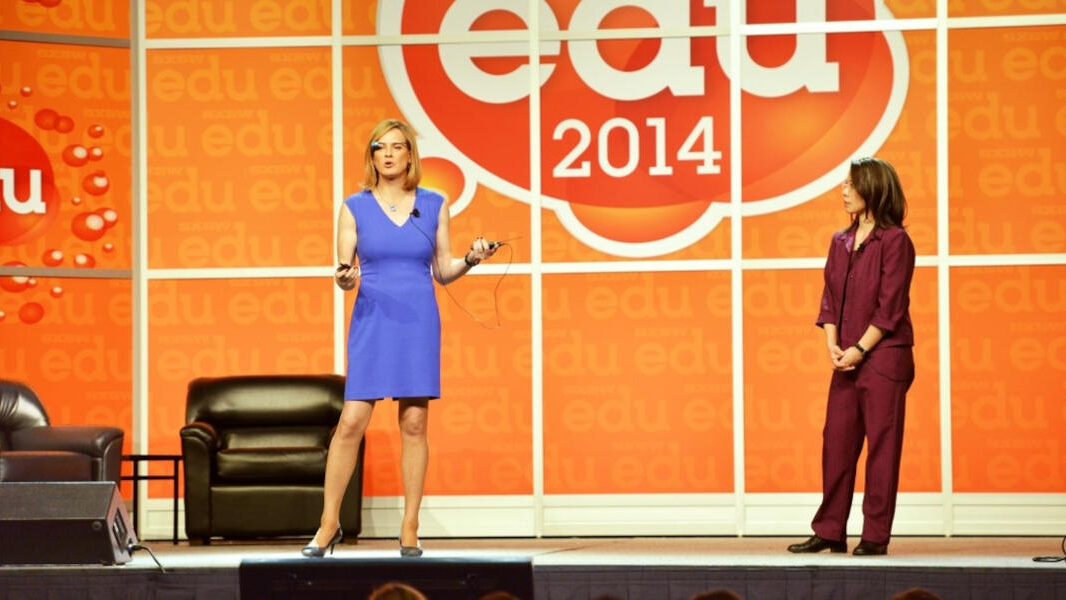
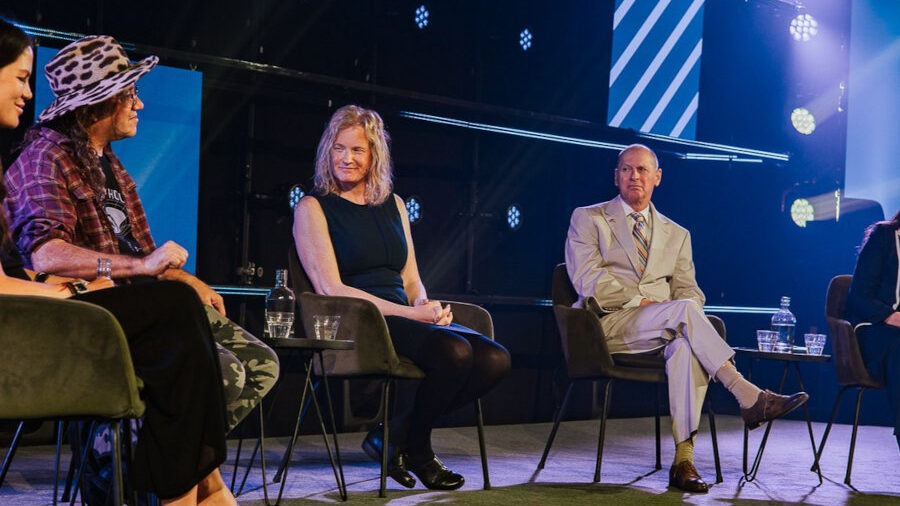
Ming is a busy public educator—TEDx and TEDMED, humanitarian data forums, HR and investment conferences, and policy conversations.
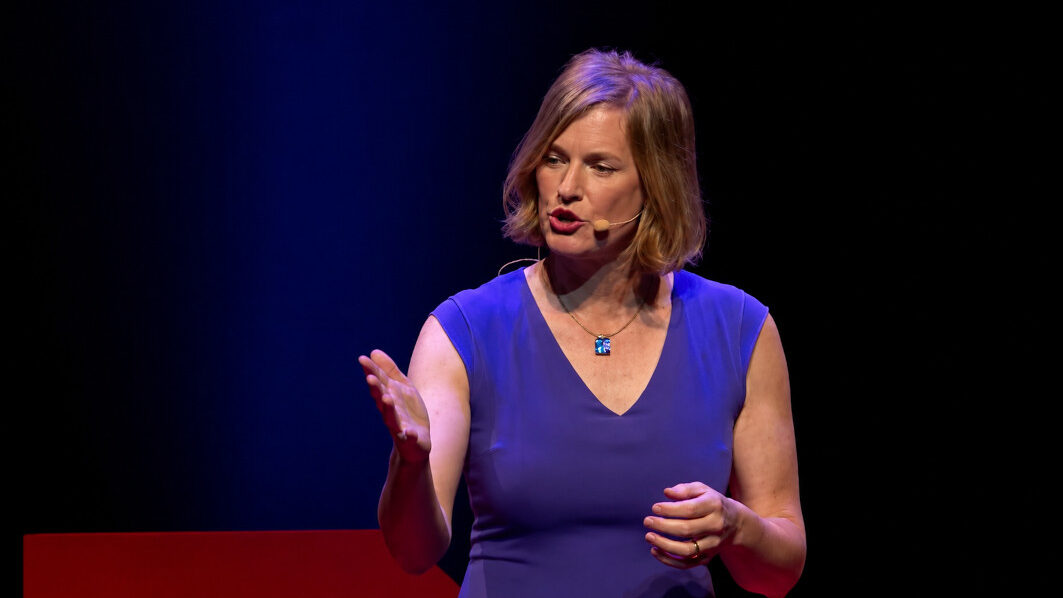
The talk titles vary, but the core questions repeat:
- How do we build better people (not just better machines)?
- What incentives actually drive human learning and creativity?
- What institutional habits keep us from recognizing talent?
The through-line is disciplined optimism: the belief that careful science, empathetic design, and vivid storytelling can pull systems toward better outcomes.
Recognition (and why it matters)
Her work has landed her on global lists and in long-form profiles. Those aren’t just trophies; they signal where the conversation is going—away from hype about AI as magic and toward a grounded discourse about who gets power from these systems, and how to make sure the answer is “all of us.”
Five ideas to steal from Vivienne Ming
- Potential beats pedigree. If your hiring or admissions process filters by proxies (schools, titles) more than by evidence of learning and contribution, you’re burning talent. Rethink the signals you privilege.
- Measure the friction. Don’t just celebrate diversity; quantify the extra costs some people pay to reach the same outcomes. Then remove them.
- Augment, don’t replace. The best uses of AI make people better—parents, teachers, nurses, analysts—not obsolete. Design for collaboration.
- Rights keep pace with tools. If AI systems are making consequential decisions, access to AI that works for you (and explainable recourse when it doesn’t) should be treated as a right, not a luxury.
- Start where it’s personal. Some of the most generative ideas come from solving a specific, lived problem well—then adapting the pattern.
It would be easy to paint Ming as relentlessly victorious, the “superhuman inventor” trope. She resists that. The point of sharing the early detours isn’t drama. But it’s permission. Lives don’t have to be linear to be meaningful.
You can step out, step back in, and still shape the frontier. For any transgender woman (or anyone, really) who has been told it’s too late or the path is too messy, her career answers: the path is the work.
Life’s challenging for Trans Women, but
Vivienne Ming’s career is a case study in applied hope: take rigorous science, point it at human problems, and build interventions that make ordinary lives richer. It’s also a reminder that transgender women are not just subjects of debate. They are scientists, executives, parents, and public intellectuals steering the future.
Follow Vivienne Ming
Stay connected Vivienne Ming and support her journey by following her on social media and professional platforms:
- Instagram: @neuraltheory
- X: @neuraltheory
Someone in your network, an employer, a teacher, a policymaker, a parent, may need this nudge to think bigger about people, and to build systems worthy of them. Don’t hesitate to share this article. This simple gesture could be the start of your brighter community.