Julia Serano – From Biologist to Trans Feminist Trailblazer

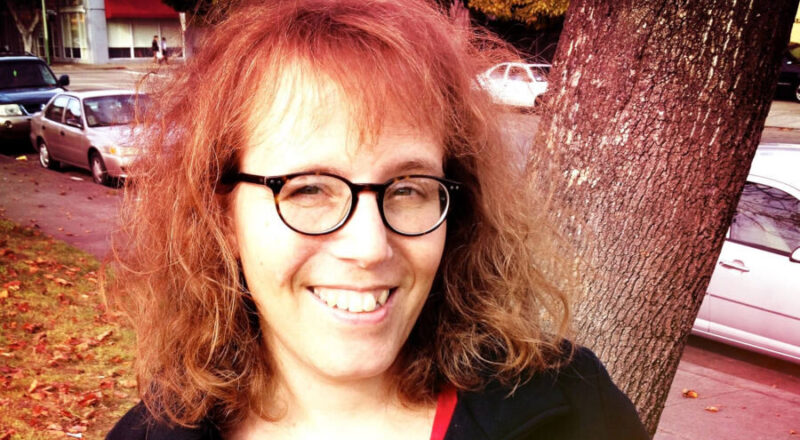
Julia Serano is a writer, biologist, performer, and one of the most influential voices in gender discussions today. Her journey from science labs to stages and book tours is a reflection of her unique ability to blend academic knowledge with personal experience.
Serano’s story is not just about being transgender—it’s about her pursuit of knowledge, creativity, and challenging societal norms.
Background and Growing Up
Julia Serano was born in 1967 and grew up in the suburbs of Kansas City, Missouri. From a young age, she had a strong interest in science, which would later shape her academic and professional pursuits.

Gender Dysphoria
While growing up, Serano grappled with feelings of gender dysphoria, though she didn’t have the language or community to fully understand these feelings at the time. Her childhood and teenage years were marked by an internal struggle between societal expectations and her personal sense of self.
Education
Serano’s love for science led her to pursue a Ph.D. in Biochemistry and Molecular Biophysics at Columbia University. Her research focused on developmental biology, particularly genetics and the study of RNA localization in Drosophila (fruit flies).
Researcher at the University of California, Berkeley
She later worked as a researcher at the University of California, Berkeley, where she studied evolutionary biology and genetics for 17 years.
Her background in biology not only provided her with a deep understanding of human development but also informed her later writings on gender and identity, where she applied both scientific and cultural analysis to discuss complex issues related to transgender identity.
Transition and Personal Growth
Julia Serano’s transition began in the early 2000s, but the roots of her self-discovery started earlier.
Coming Out
In 1994, at the age of 26, she realized that suppressing her feminine side was no longer sustainable. At the time, Serano was fully closeted but knew that she needed to explore her gender identity.
She began participating in transgender communities and started expressing her femininity in public spaces, which helped demystify her own experiences of being a woman.
This period was instrumental in helping her come to terms with her gender identity, leading to her decision to fully transition between 2000 and 2001.
How her Learnings Helped her Transition
As Serano transitioned, her scientific background as a biologist helped her challenge some of the misconceptions she encountered, both within the medical system and broader society.
She faced the same societal expectations as other trans women, but her academic perspective gave her the tools to analyze and push back against rigid gender norms.
She began to see the connections between her experiences and broader cultural patterns that devalue femininity, whether in cisgender or transgender women. This understanding became the foundation of her later work on “trans-misogyny,” the term she coined to describe the specific discrimination faced by trans women.
After Transitioning
Post-transition, Serano’s personal growth extended beyond her gender identity. She became more active in both the transgender and feminist movements, which empowered her to integrate her intellectual, scientific, and lived experiences.
Her writing and public speaking took on a new depth as she used her own life as an example to challenge societal beliefs about gender.
Through books like Whipping Girl and Excluded, Serano reflects on how her transition allowed her to understand not only her own femininity but also the broader cultural forces that shape the way society views and treats gender-nonconforming individuals.
Writing and Intellectual Contributions
Apart from her work as a trailblazing researcher, she is also widely known for her books.
Whipping Girl
She is best known for her groundbreaking book Whipping Girl: A Transsexual Woman on Sexism and the Scapegoating of Femininity (2007).
This work became a foundational text in both transgender and feminist discourses, introducing the concept of “trans-misogyny”—the specific discrimination trans women face due to both their gender identity and femininity.
Serano’s writing goes beyond a personal narrative; she delves into the societal devaluation of femininity and argues that this is at the heart of not only transphobia but also sexism. Her essays in Whipping Girl challenged readers to rethink the intersections of gender, femininity, and power.
Excluded
In her 2013 book Excluded: Making Feminist and Queer Movements More Inclusive, Serano continued to push for greater inclusivity within activist spaces. She critiqued the ways certain movements—feminist, queer, and LGBTQ+—often marginalize or exclude trans voices, particularly those of trans women.
She calls for a more intersectional approach, ensuring that movements meant to uplift the marginalized do not replicate the same exclusionary tactics they seek to dismantle.
Her clear, well-argued critiques have made Excluded another essential read for those interested in creating more inclusive and effective social justice movements.
Other Literary Works
Beyond her books, Serano has published extensively in academic journals, anthologies, and on platforms such as Medium, where she writes about identity politics, social justice, and the LGBTQ+ community.
She is also a sought-after speaker at universities and conferences, where her blend of personal experience and academic rigor continues to influence discussions on gender, feminism, and inclusivity.
Her intellectual contributions have had a lasting impact, with her works being used in gender studies courses and cited in feminist and queer scholarship worldwide.
Life as a Biologist and Performer
Julia Serano spent 17 years as a researcher in genetics, developmental biology, and evolutionary biology, primarily at the University of California, Berkeley.
Study of Genetics
During her time as a scientist, she specialized in RNA localization in Drosophila (fruit flies), studying how genes control development and evolution.
Her scientific work deeply informed her later writings, particularly when she discussed biological arguments related to gender. Serano has often used her expertise to debunk misconceptions about biological determinism, challenging the idea that biology rigidly defines gender roles.
She integrates her scientific background with her social justice work, offering a unique blend of personal experience and academic insight in her writing and advocacy.
Spoken-word Performances
In addition to her scientific career, she is also a performer. She has been active in spoken-word performances and is a regular at events like the National Queer Arts Festival and San Francisco’s Trans March.
Serano’s spoken-word pieces often center around her experiences as a transgender woman, blending humor, personal reflection, and political critique.
Bitesize
She was also a guitarist and vocalist for the band Bitesize from 1997 to the early 2000s, showing her versatility as both a scientist and an artist. Her artistic endeavors allow her to reach a broader audience, providing creative ways to explore gender and identity.
Hosting and More
Serano continues to perform in a variety of venues, hosting and curating events like GenderEnders, a performance series showcasing transgender and genderqueer artists.
These performances give her a platform to engage with others through creative expression, adding depth to her work as both a scientist and a gender theorist.
By merging science, art, and activism, she provides a powerful example of how interdisciplinary approaches can enrich conversations about gender, identity, and equality.
Julia’s Impact on Transgender People and Broader Society
Julia Serano’s work has had a profound influence on the transgender community, offering both intellectual tools and emotional validation.
Trans-misogyny
Through her books, she provided a framework for understanding the unique challenges faced by trans women, particularly the concept of “trans-misogyny.”
This term has empowered many transgender women to articulate the specific ways in which they experience both sexism and transphobia, helping them find their voice in both feminist and LGBTQ+ spaces.
Serano’s openness about her own experiences and her ability to combine personal narrative with academic analysis have made her a role model for trans people seeking to understand their place in a society that often marginalizes them.
Broader Societal Conversations
Beyond the transgender community, she has been instrumental in shifting broader societal conversations about gender, femininity, and identity.
Her critiques of how society undervalues femininity, even in feminist spaces, have sparked discussions about the intersections of sexism and transphobia, challenging long-held assumptions about gender roles.
Follow Julia Serano
Stay connected Julia Serano Ganda and support her journey by following her on social media and professional platforms:
- Website: Julia Serano’s Official Website
- Facebook: @juliaserano
- Instagram: @juliaserano
- X: @JuliaSerano
- Youtube: @juliaserano
Were you inspired by her bravery and story? Feel free to share this article on your social media profiles. Doing so will help spread awareness and create safer spaces for trans individuals around the world.